|
Coconut Oil Online |
|
Home of Coconut Oil Supreme™ |
|
Providing the world's best coconut oil since 2001. |
|
800.922.1744 |
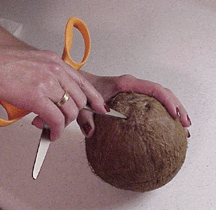
TIPS FOR OPENING A FRESH COCONUTFresh coconut meat makes a delicious and satisfying snack which is at the same time healthful. I think that one of the main reasons more people don't buy fresh coconuts at the market is that the task of opening them may seem a little daunting. In fact, many of the suggestions which I have seen are so much trouble and make such a mess that it hardly seems worth the effort. Using a very simple method you can enjoy fresh coconut with very little effort. I should qualify the word "fresh" when describing coconuts since you may have the same experience which I have had and find that the coconut which you open is fresh only in the sense that it has not been processed and not necessarily that it is fit to eat. Actually, here in Ohio, I often find that the coconuts from the market are rancid when I open them. Using the method below you can determine pretty quickly whether the coconut you have is good or not so I suggest that when you buy a coconut you keep the receipt from the market. If it is bad return it and try again. I often buy two or three nuts to increase the odds of getting a good one and then return the bad nuts. Many stores now carry coconuts which have been scored around the diameter with a saw blade, supposedly to make them easier to open. In my experience this only serves to destroy the protective coating around the coconut meat thus allowing it to rapidly become rancid or moldy. If you have a choice, buy coconuts which have not been scored. Step 1. Draining the coconut water from the nut. In order to drain the liquid from the coconut (coconut water) you obviously need to make a hole in the nut. The easiest way that I have found to do this is with a pair of scissors. Using one blade of the scissors (see the photo below) probe the three "eyes" on the end of the coconut until you locate the soft one. Then use the scissor blade to ream a hole in this eye. You should easily be able to make a large enough hole to drain the coconut. Drain the coconut water into a glass. If it has a sweet coconut smell, take a sip of it to check the taste. If it has a sweet fresh coconut taste, proceed to Step 2. (Drink the coconut water or refrigerate it for later use.) If it smells or tastes sour or moldy, there is no point in proceeding; return it to the market for another nut or a refund.
Step 2. Breaking open the coconut. After draining the coconut put it inside one of the plastic bags which are now used by practically all supermarkets. Then wrap this bag around the nut. Place the wrapped nut inside another plastic grocery bag (I normally double bag the nut for added strength.) Holding the handles, swing the bag down onto a concrete step, sidewalk, garage floor, etc. You can also throw the bag down which gives you a little more control over the impact. The impact will shatter the coconut shell into several pieces. Throw the nut down several times until the nut is broken into pieces of manageable size. The impact will not only break the shell but will cause much of the coconut meat to separate from it. Open the bag and remove the coconut pieces. Coconut meat which is still attached to the shell can be separated by inserting the blade of a sturdy knife between the meat and the shell and then giving it a twist. The meat will normally pop away from the shell. Rinse the coconut meat to wash off any bits of shell and store in the refrigerator. Some people peel off the thin brown layer but I normally eat that along with the meat. If you are going to grate the coconut for use in a recipe I would suggest peeling off the brown so that the coconut is snow white. | |
|

Copyright 2001-2008 Mid-American Marketing Corp.